When Open Systems Go Off the Rails: Why EACOE™ and BACOE™ Are the Antidote to Wikipedia-Style Governance Failure in Enterprise Architecture and Business Architecture
Why EACOE™ and BACOE™ Are the Antidote to Wikipedia-Style Governance Failure in Enterprise Architecture and Business Architecture


In June 2026, Wikipedia co-founder Larry Sanger published an essay titled “I Co-Founded Wikipedia. Now I’m Banned for Life,” arguing that the encyclopedia he helped build had been overtaken by bias and censorship and that he was later banned after pushing reform proposals. He has also argued that Wikipedia drifted away from its original mission of being a neutral, open, verifiable “free, fair storehouse of knowledge.
The episode matters beyond media or politics. It illustrates a recurring governance pattern: a system begins with explicit principles and a compelling mission, but over time, informal power structures can capture interpretation, enforcement becomes uneven, and reformers discover that the system protects itself before it protects its founding ideals.
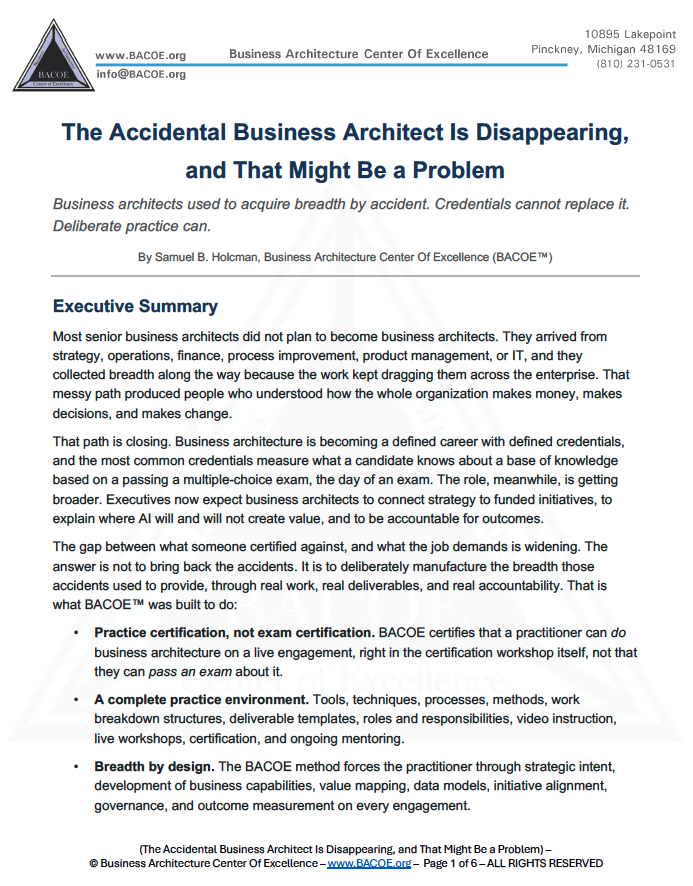
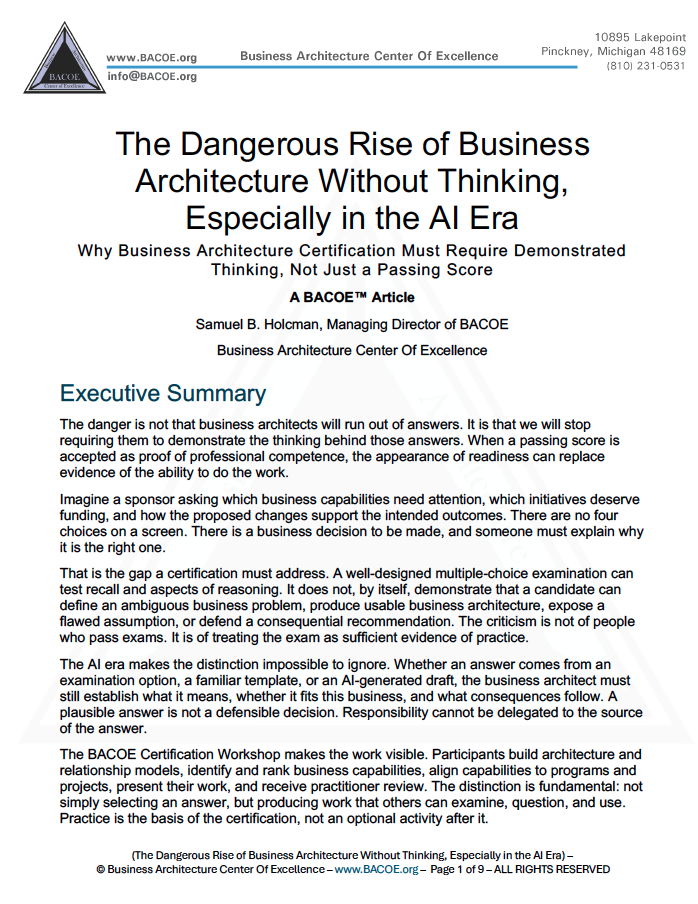
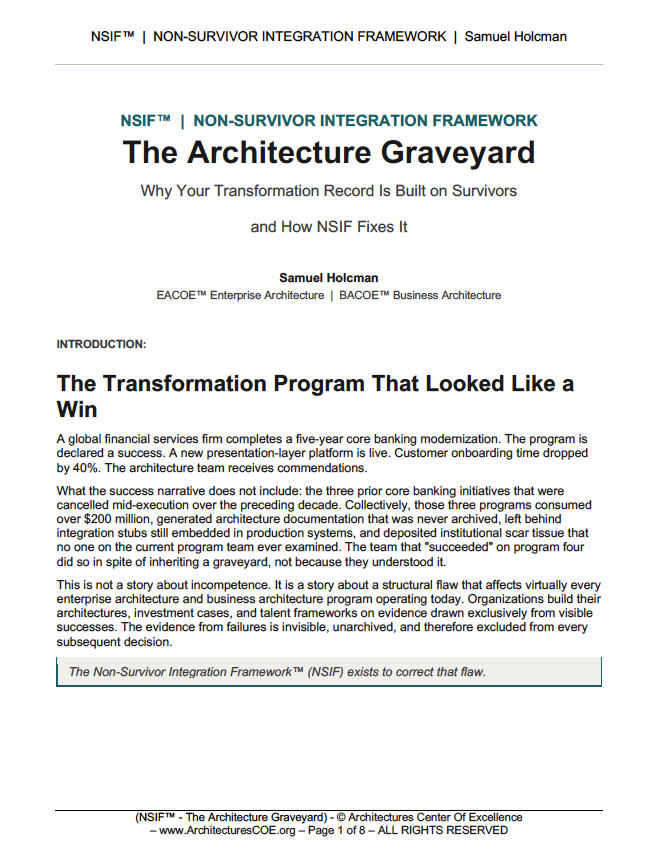
That pattern should concern any enterprise relying on open or semi-open standards as the backbone of architecture practice. It also helps explain why practitioner-built frameworks such as EACOE™ and BACOE™ position themselves as a corrective to the weaknesses that can emerge in ecosystems like TOGAF® and BIZBOK®.
Keep learning with BACOE
Explore 195 articles, videos, podcasts and practical resources in the BACOE Valuable Content Library to support your business architecture work.